
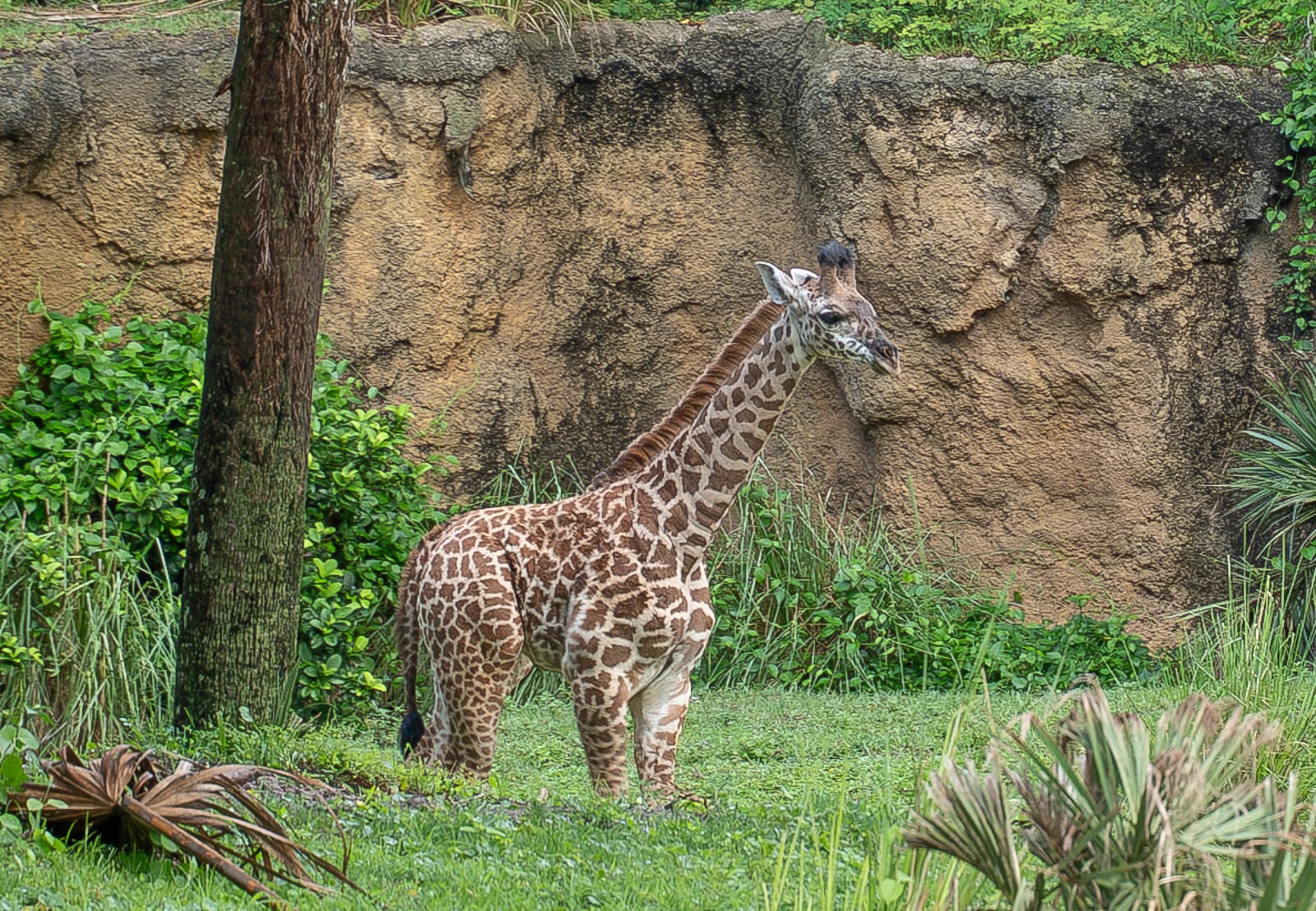
INSIDE LOOK: Masai giraffe calf, Ivy, makes debut at Disney’s Animal Kingdom
It’s a whole new world for Ivy, Disney’s Animal Kingdom’s newest Masai giraffe calf, as she explored the savanna at the park for the first time ever.
Disney invited us to join them on Kilimanjaro Safaris to witness this big moment in Ivy’s life as she explored her new surroundings with her mom, Willow, close by her side.

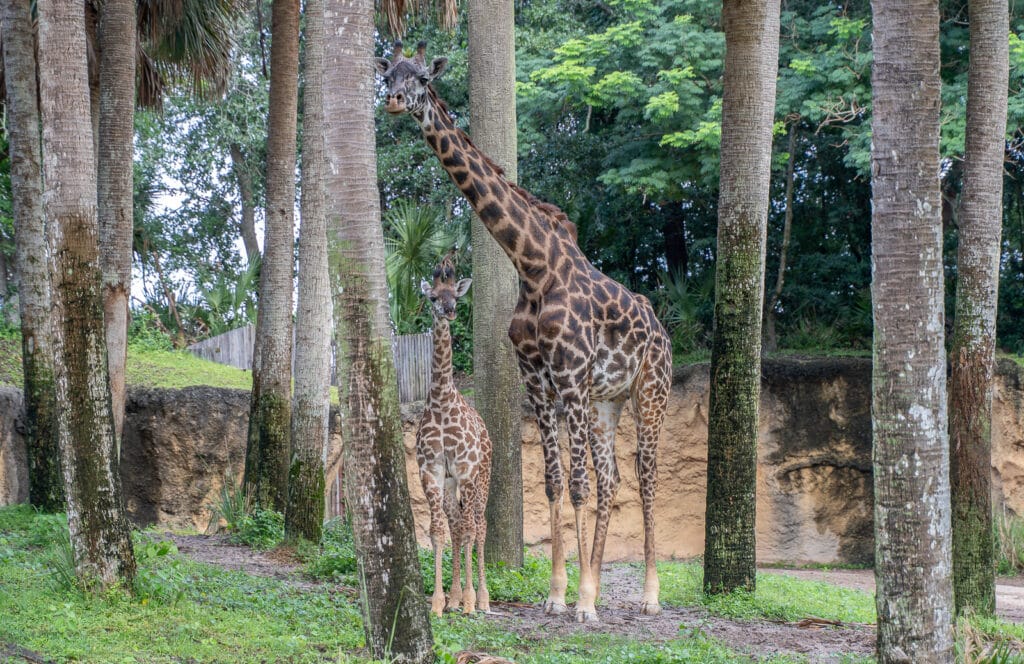
Ivy was born in April at Animal Kingdom, weighing 120 pounds and standing nearly 6 feet tall. Her birth marks a significant milestone for her species, which is classified as endangered by the International Union for Conservation of Nature. It’s estimated there are as few as 30,000 Masai giraffe remaining in the world.
Giving your kids the chance to see her for themselves on Kilimanjaro Safaris is not just a chance to be wowed by this graceful creature, but also to expose them to this great big world we live in and the animals that call it home. And why it’s so important we work to ensure species like Ivy’s a part of our world for generations to come.
We had a chance to meet with one of Ivy’s animal Keepers, Derra Leaonard, along with Caitlin Cox, who is a Senior Representative with the Disney Conservation Program. We’re learning about what it took to get her ready for this big day on the savanna and the ongoing work to conserve species like hers.
Related: Disney Animal Kingdom’s Food Moment: Viral snacks, 10 years of Tiffins, and new flavors
Our conversation with Derra Leonard, Animal Keeper at Disney’s Animal Kingdom
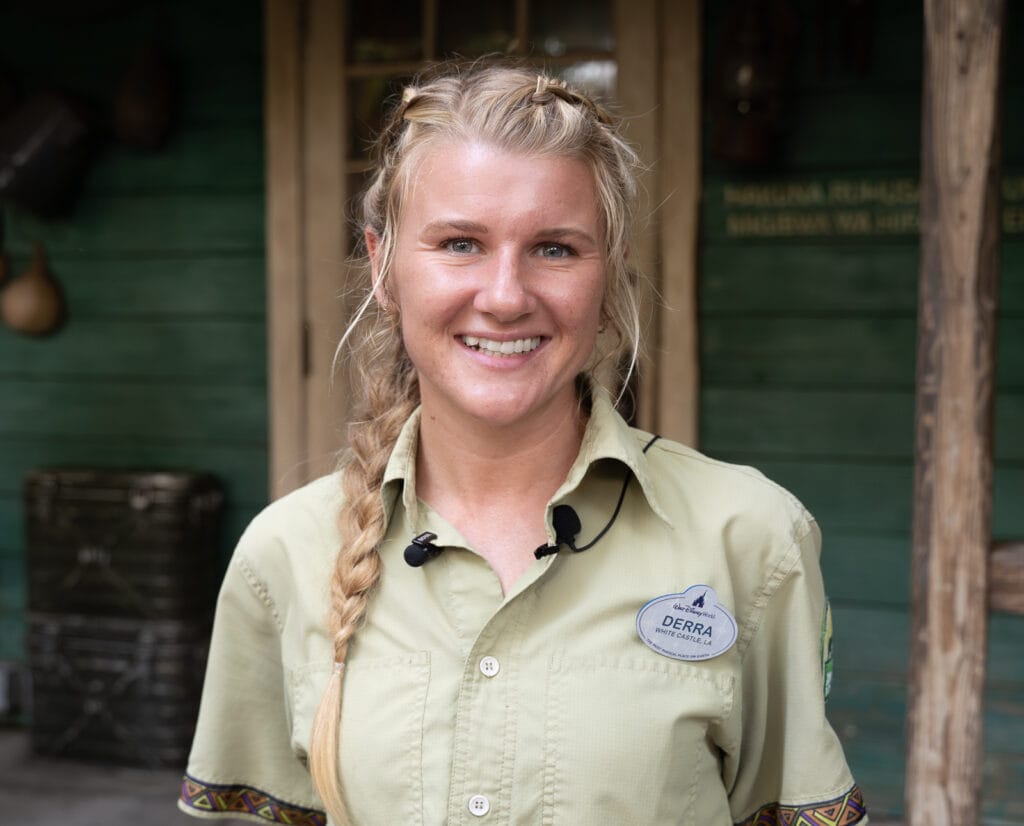
Derra—tell us about Ivy and why she’s so special.
Derra Leaonard: Ivy is a super unique giraffe. She is a baby girl, and she’s also very shy. So I know a lot of you guys might also know Tucker. That is her older half-brother. He is totally opposite from Ivy. He’s very independent, very spunky. He’s also grown into that role a little bit, but Ivy’s more shy. She’s a little more, you know, staying close to mom, so we saw that on the savanna. But yeah, we’re gonna see how things go as she gets more comfortable out there.
So far, so good?
DL: So far, so good. yeah. Her first steps out there— she came out with Willow and then Lily as well, she’s one of our other giraffes out here. She came out the first couple of steps really close to mom, but as you saw too, she was kind of exploring a little bit.
How did you prepare to introduce her to the savanna?
DL: To prepare them for coming onto the savanna, we actually have— you might have seen the burlap up. We have burlap up that is a visual barrier for her, so she knows where to go and where not to go.
We also just have trucks posted up on the savanna. We have a truck in several different areas, and their job is just to make sure Ivy knows where she’s going, and as she comes out and meets new animals, those interactions are normal and safe because she’s meeting lots of new animals today.
So we just kind of make sure we’re prepared and that everything goes according to plan,
We were new to her, too, us Homo sapiens. She definitely gave us a look, when we were in the safari trucks.
DL: Everything is new for her. So the savanna is new, just seeing all the different trees and all the land. It’s a very beautiful, big savanna out there. But also, yeah, the trucks, so we’re unique in a sense that we have the Kilimanjaro Safari ride that comes through. So those big giant trucks that come through. And then, yes, as you said, Homo sapiens are also a mix of that.
She’s used to us, but we’re wearing special clothes. Whereas, you know, in the trucks, it’s just a bunch of different people, super excited to see her. When you’re out there, you see this tiny little giraffe, and people get excited. You have to remind people to be quiet, stay calm, because everything, as I said, is brand new to her.
How are you feeling as her trainer to see her out there on the savanna for the first time?
DL: She’s just kind of unique. I’m one of her primary trainers. There are two of us who are going to be primarily with her. So building that relationship, that bond, because she is a little nervous and shy, gaining that trust and getting her to get used to you.
So it’s super exciting and fun to get her to come close to you, and take leaves and browse from you, and just build that relationship and trust. And because she is only two months old, we have lots of growing to do. So just watching her change and grow and get more comfortable is just the best thing in the world.
When is the best time to see her on safari?
DL: Right now, as you guys saw, we were out there, and she kind of hopped into the trees. So she may be hiding. She will be out for a good bit of the day. We’re going to see what time, you know, works for her. But just basically try to come earlier in the day if you can.
Disney Conservation Fund: Saving a Species
Our conversation with Caitlin Cox, Senior Representative with Disney Conservation Fund.
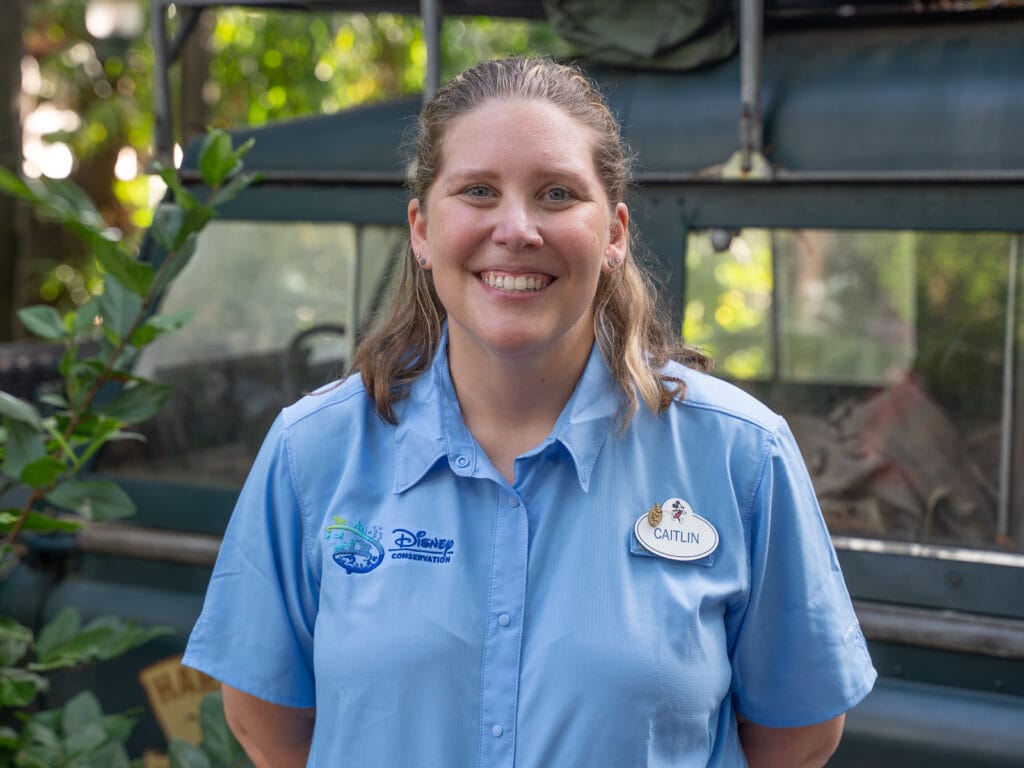
Caitlin, tell us about the significance of today.
DC: It’s incredible. First off, to be out there and be able to see Ivy make her debut on the savanna was just such a special moment. She’s so, so adorable. But on top of that, not only is she super cute, she’s also a really important part of a broader conservation effort that Disney participates in with the Association of Zoos and Aquariums. It’s called the Species Survival Plan.
As part of that plan, she’s contributing to maintaining the genetic diversity for Masai giraffe within the AZA across institutions, but also to help preserve those genetics so that eventually we hope the giraffe doesn’t go extinct.
So that’s a really important role that Ivy specifically is playing.
Another one that she plays is that she serves as an ambassador for all of those Masai giraffes that are over in Africa right now. And that’s an important thing for the Disney Conservation Fund for guests to be able to come here, to get to see her for themselves, and then maybe go home and be inspired to want to learn more about what they can do to help animals, whether they’re animals in their own backyard or animals all the way over in Kenya, in Africa.
Her birth was intentional as part of the Species Survival Program.
DC: I’m always so impressed by the leadership in the animal care team here at Disney’s Animal Kingdom and across AZA institutions. So much thought and careful planning go into experiences like this to make sure that we’re setting not only the giraffe family here at Animal Kingdom up for success, but again, that whole population across Zoos and aquariums.
So it’s always so cool to see how everybody comes together and can contribute to such a big moment like this.
What do you hope people learn from their visits here?
DC: I think the real key when you come to visit Animal Kingdom is just being inspired by what you see here and wanting to either learn more, contribute to an organization like the Disney Conservation Fund, or an organization that’s important to you locally, if you have the means to do so. Volunteer time is a really important resource as well.
And so I hope that people come away inspired to want to learn more and protect again, not only habitats around the world, but support those animals in your own backyard, because truly it is all connected and really is a circle of life.
Ivy is playing a big role in this connection with guests.
DC: I think she’s a really, really important part of the team here at Disney’s Animal Kingdom and the herd here specifically. And again, I think Ivy just serves as a really great representative for the Disney Conservation Fund to be able to point to, to share her story, and then be able to turn and say, “Hey, look at this Masai, look at these ones over here in the wild. Here are some of the challenges that they’re facing, and here are some things we can do to help.”
And I think it’s really important. It’s great for us to have such an adorably cute connection to help people see.
Can you speak about the history of the Conservation Fund, like why it’s in place in the first place, and why it is so important to be impacted?
DC: The Disney Conservation Fund has been around since 1995, and the purpose across all three of those decades really has been to support organizations that are working around the world to save wildlife, protect their corridors and their habitats, promote environmental resilience, and to inspire the next generation of conservation leaders around the world.
That’s been our mission through and through. It continues still today, and I think once you get to see Ivy and some of the other incredible animals here, you really get to see that magic of nature and all of the wonder that comes with it.
So it’s a thrill to be able to be a part of that work, to be able to spread that joy, and to help protect animals around the world through the Conservation Fund.
Why is it so important for families to bring their kids to zoos and parks like Animal Kingdom to connect with the animals?
DC: The next generation—kids are our biggest advocates. We find a lot of times we’ll have a conversation out in the park, and they come away just so inspired. You’re in a place where your dreams can come true, and they think that saving the world is one of those possibilities.
So it’s so inspiring to walk away from a conversation with a kid who’s just like, “Oh, save the world? Easy, I got that,” and walk away inspired. It’s motivating for me, and it’s kind of a nice little circle as well to be a part of.
