
Eczema in Kids: What Parents Should Know
If your child has ever dealt with dry, itchy, inflamed skin, you’re not alone. While eczema often improves naturally as children grow, it can sometimes last through adolescence and adulthood. But with the right routine, most children’s symptoms can be well managed.
Here’s what parents should know, including updates from the American Academy of Pediatrics (AAP).
What is Eczema and What Causes it?
Eczema (also called atopic dermatitis) is a chronic skin condition that causes dry, itchy, and inflamed skin.
It’s caused by a combination of genetics and dysfunction of the skin barrier and immune system. Children with eczema often lack a protein called filaggrin, which helps protect the outer layer of skin. If you have eczema yourself, your child is more likely to have it too.
Environmental factors like scented skin products, rough fabrics, heat, stress, or changes in humidity can trigger flares, but they aren’t the underlying cause.
What Does Eczema Look Like in Kids?
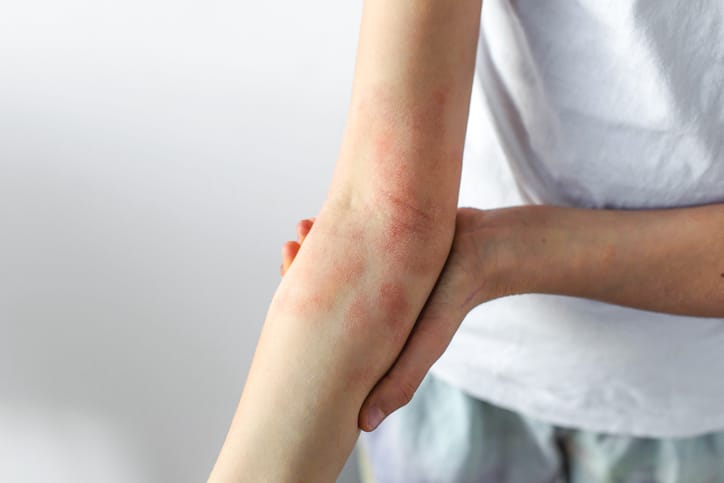
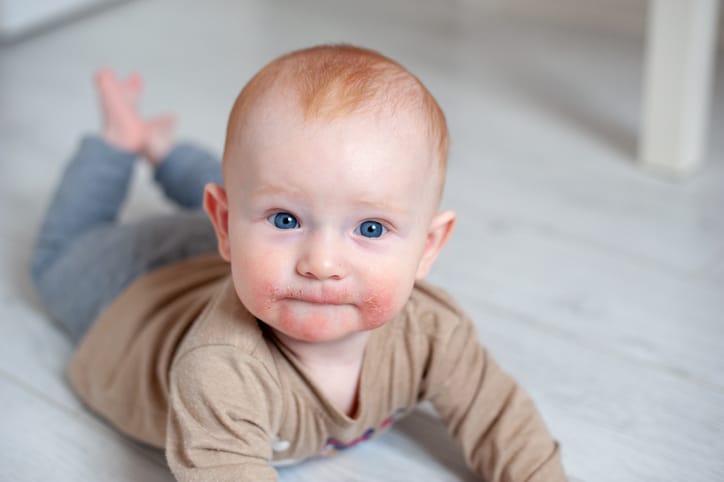
In babies, eczema often appears on the cheeks, scalp, wrists, and ankles. In older children, it tends to show up in the creases of the elbows and knees, on the neck, and around the eyes.
The 2025 AAP clinical report notes that eczema symptoms tend to be more severe in Black and Hispanic children, and both groups are more likely to miss school because of the condition. If your child’s eczema is significantly affecting their daily life, that’s a sign it’s time to talk to a specialist.
Will it Go Away?
While there’s no cure, about half of all children with eczema see significant improvement between ages five and 15.
Avoiding your child’s specific triggers, following a consistent skincare routine, and working with a pediatrician to develop an effective management plan can help reduce flares.
Common Misconceptions
- “Food is causing my child’s eczema.” While up to 40% of children with eczema also have food allergies, food doesn’t cause eczema. Certain foods may trigger flares in children with severe eczema, but they aren’t the root cause.
- “I just need to use the steroid cream when it flares.” Topical steroids help during flares, but the most important thing you can do is increase the use of moisturizers. Kids with eczema should always feel like they recently applied moisturizer. If their skin feels dry, it’s time to reapply.
The Three-Minute Rule
Applying a thick moisturizer within three minutes of bathing is a simple and effective way to manage eczema.
When to Call the Doctor
- Your baby is showing signs of eczema; early diagnosis and treatment are more effective.
- Your child’s eczema is disrupting sleep, school, or daily activities.
- Flares aren’t improving with the usual treatments.
Seek immediate care if you notice signs of infection like swollen areas, pus, spreading redness, or oozing scabs. Eczema infections are very treatable but can range from mild to serious, so don’t wait.
Latest Updates From the AAP
The AAP released updated eczema guidance in 2025 with encouraging news for families dealing with more severe cases. Several newer therapies are showing improved safety and effectiveness outcomes.
Additionally, dupilumab is now approved for infants as young as six months. If your child has severe eczema, ask your pediatrician or specialist about what’s available.
Find Care for Your Child
Having the right care team can make all the difference. Nemours Children’s Health has primary care providers across Central Florida who are dedicated to helping families build treatment plans tailored to their child’s unique needs.
Click here to find a Nemours Children’s pediatrician near you.
*Presented By: Nemours Children’s Health
Return to Health + Wellness
